Diagnostic
ARIA
A pen-and-paper reading diagnostic that measures how a person understands, not just what they can decode. From age 8 to adult, on one 100–800 scale, working anywhere on paper.


The world has spent a century measuring what people produce. Almost no one has measured the thing that produces it. Agnira measures how a mind understands what it reads, and turns that into structured data that helps people and institutions decide better.

Reading tests measure speed, accuracy, and the difficulty of a text. None of them measure whether the reader actually understood. They measure the surface and infer the rest. So a student can clear every reading test for years while comprehension quietly fails underneath, and nobody sees it until it is far too late to fix cheaply.
Agnira measures the part everyone else infers. Not what was read. Whether, and how, it was understood.
We define intelligence as the quality of the process by which a mind turns information into understanding. Not the facts retained, but the work of making meaning. It is the one thing sitting upstream of almost every decision a person will ever make, and almost no one has measured it. That is the work we do.
Every ARIA assessment produces a structured, comparable record of how one person understood what they read. Run across thousands of people, grades, and years, those records become something that did not exist before: a growing, standardised, longitudinal measure of human comprehension.
That data has a quiet, practical value. For a parent, it turns a vague worry into a clear next step. For a school, it shows exactly where understanding is breaking down, and when. At scale, it lets a system see comprehension the way an economy sees inflation, as something measured, tracked, and acted upon, rather than guessed at.
Why the data matters →
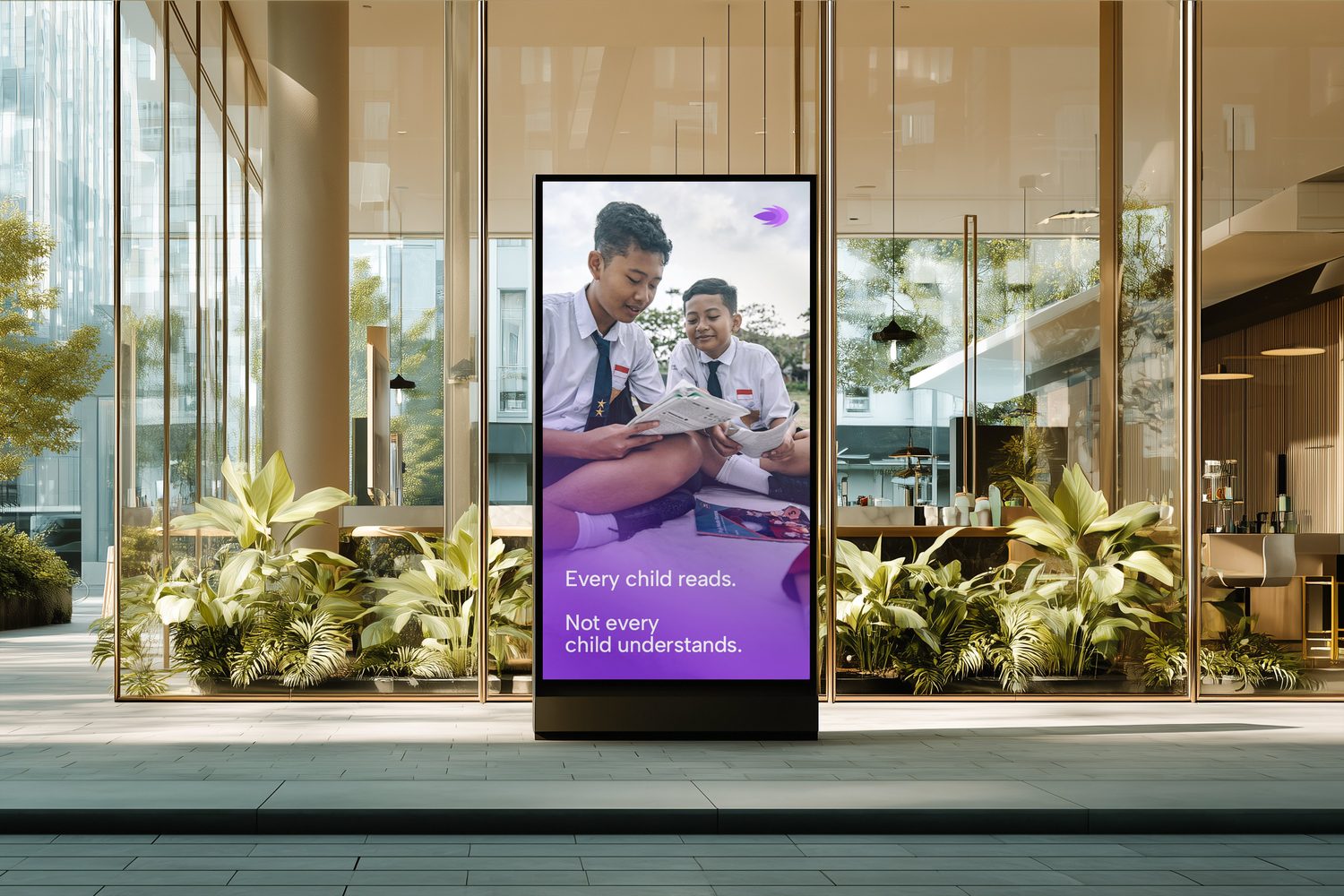
One measures. The others act on what it finds. Together they take a child from "we think she's struggling" to "here is exactly where, and here is what to do."
A pen-and-paper reading diagnostic that measures how a person understands, not just what they can decode. From age 8 to adult, on one 100–800 scale, working anywhere on paper.

A curated reading library for a whole class, sequenced to climb in cognitive demand across the year. ARIA tracks each reader's growth, so a shared library shows its effect on every child.
Hands-on activity kits for Nursery to Grade 8, built so that the materials carry the work and the teacher reads understanding from what the child does.

The same curation logic, brought home, so that the reading a child does outside school pulls in the same direction as the work inside it.
We have measured reading comprehension across 25 institutions in Gujarat and Pune, from metro campuses to Tier-3 towns and a university. The same shape keeps appearing. The share of students reading at grade level holds in the early grades, then drops sharply across the transition years, toward almost none by Grade 8. It is invisible to ordinary testing, because ordinary testing measures the wrong thing.
Based on the schools we have measured. Gujarat sample, 2026. A specific finding, not a national claim.
Share of readers at their grade level, tracked across grades.
At one Tier-3 town school, the share of children reading at grade level fell from 57% in Grade 3 to effectively zero by Grade 8.
A well-resourced metro school began higher, at 74% in Grade 5, and still reached zero by Grade 8. Resources delayed the fall; they did not prevent it.
The same curve appears in every institution measured, regardless of size, fees, or location. The consistency is the finding.
A cliff this consistent is not a local problem. It is a global one, hiding in plain sight wherever reading is taught and tested by its surface. The value of measuring it well runs from a single child to a whole system.
A vague fear that a child is falling behind turns into a precise picture of where understanding slips, and a clear next step. The child is understood, not just graded.
A school sees which students are quietly losing comprehension, and in which years, before it hardens into failure. Intervention moves from guesswork to evidence.
Across many institutions and eventually many countries, comprehension becomes a measurable, comparable signal, the kind of instrument a system can act on rather than estimate.
Models are trained on the output of human thought, never the process behind it. A standardised record of how comprehension actually develops, and where it breaks down, is a different kind of data. No individual child's data is ever shared, only the aggregate pattern. If you build or study AI, we wrote a short note.
One of these decides the quality of every choice a person will ever make. It is not the shopping. Yet only one of them is measured at scale.
Read →Decoding and comprehension are different acts. We test the first and assume the second. The gap between them is where readers are quietly lost.
Read →Better understanding makes better decisions. We make understanding measurable.
For a parent, a teacher, a school, or a system of schools, the first step to improving how people think is being able to see it. That is the whole of what Agnira does.